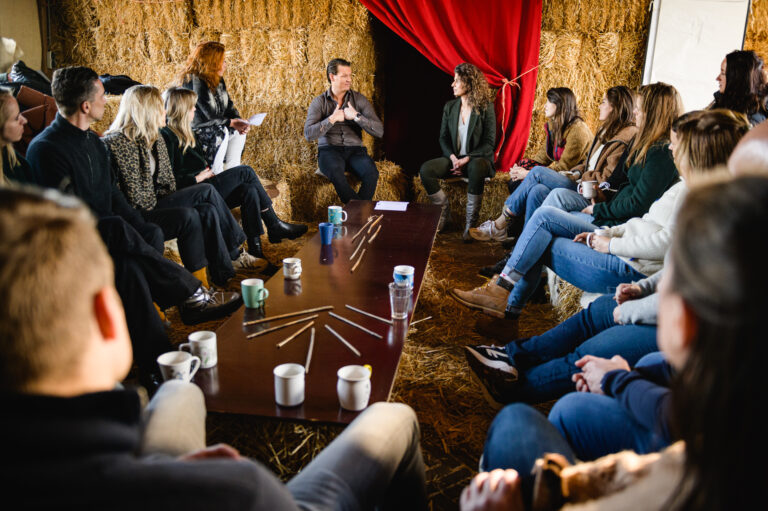


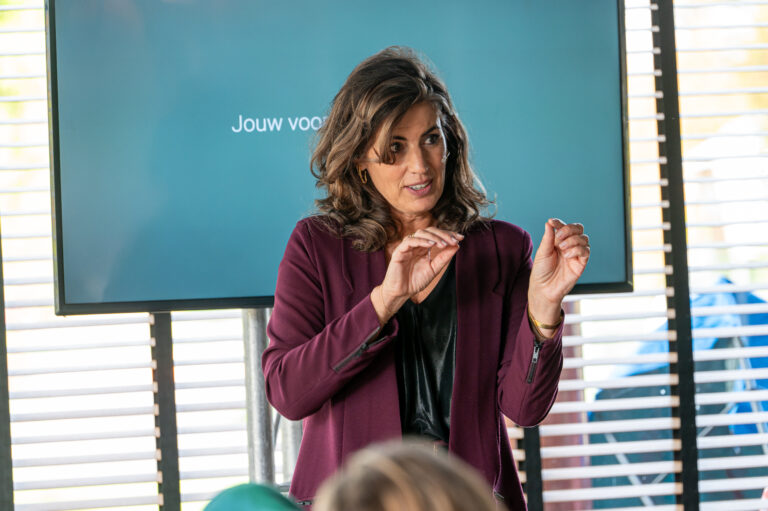

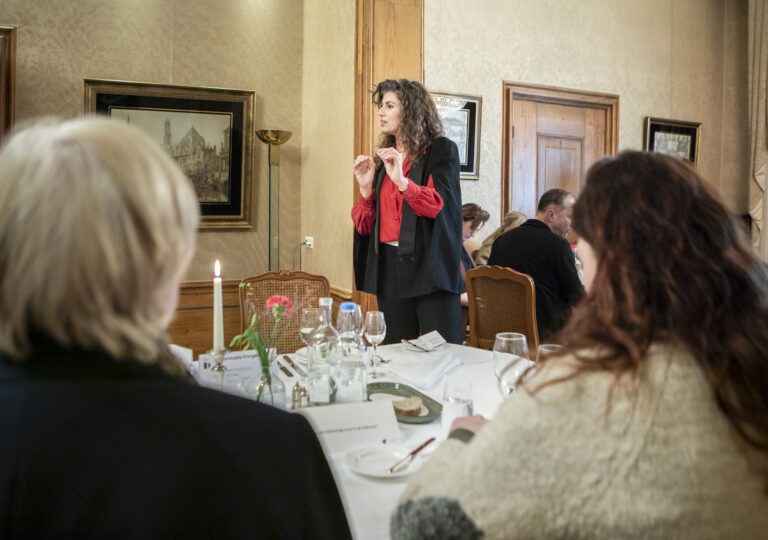
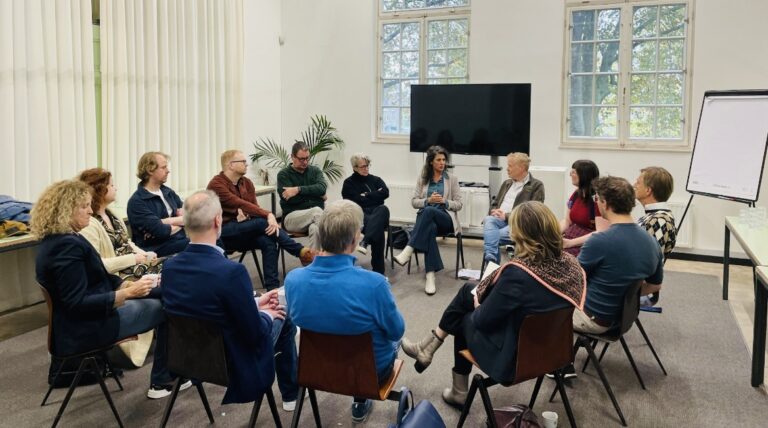
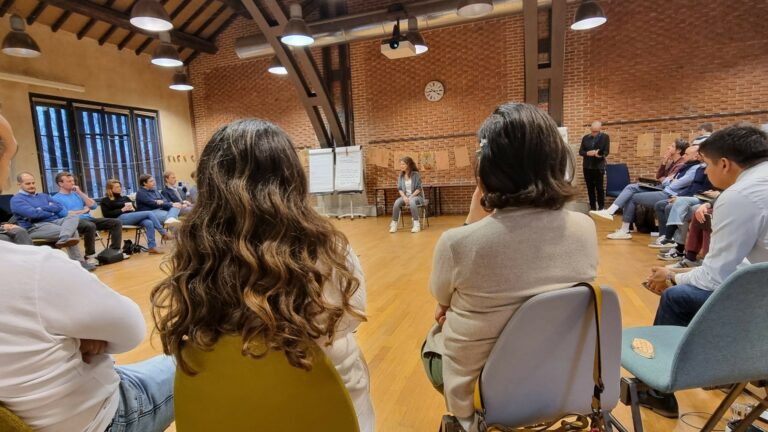
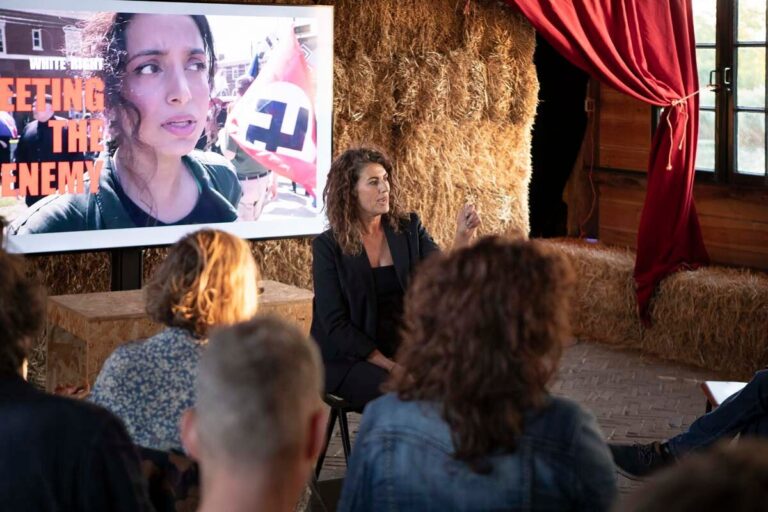



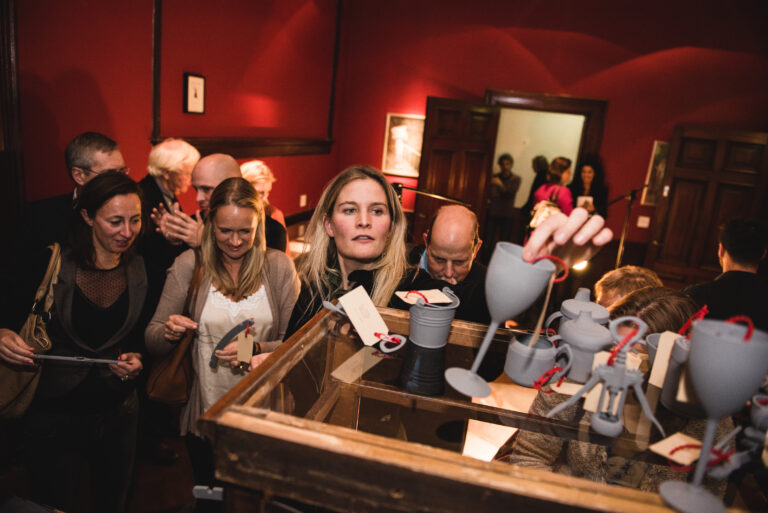
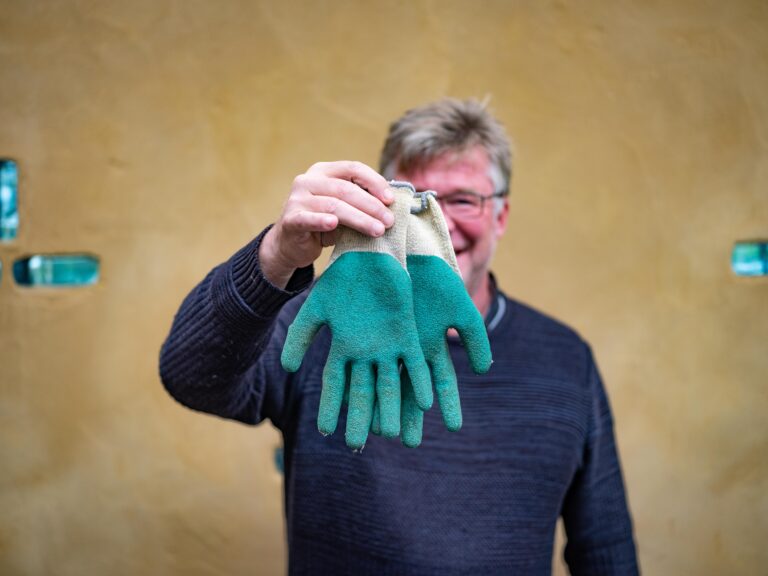
My masterclasses are experiential learning spaces with lasting impact on your daily practice. Whether you choose ‘facilitating dialogue’ or want to deepen the quality of your questions as a supervisory board member, we work in depth with your investigative capacity as the starting point. For leaders, supervisory board members and professionals who are aware that they themselves are the most important instrument for change in practice.
Choose below the masterclass that fits your board, team or organisation.
The daily work of executives and leaders is dominated by an ever more complex stream of challenges. The distinction between ordinary problems and complex challenges is rarely, if ever, made.
Problems are solved; complexity is engaged with. That engagement calls for making optimal use of the power that lies in not knowing — in your own leadership, in your team or organisation, and in a broader societal context.
By constructively deploying your curiosity, you will expand your capacity to influence and intervene. You learn to work on current challenges from your own practice, guided by the ten principles of investigative leadership.
What if you could generate a better answer to your most complex challenge simply by asking differently?
Asking the right question at the right moment is the most effective intervention for creating movement. Many of our questions are disguised advice or opinions. Only when we become skilled in the questions we ask do we move beyond the questions the system itself has created.
For three years I researched the attitude and content that belong to questions which bring progress — including through my podcast research Ask it Forward. In this masterclass, you learn to apply asking forward in your own practice in a single day.
Supervision is about people keeping sight of other people. But how do you keep sight of whether the organisation is still doing what it was designed to do?
Compliance demands are rising sharply. Regulation is not in short supply. Yet the true promise and the true risk for organisations play out in and between people.
Keeping sight requires the ability to ask the right questions, to connect different perspectives and to suspend judgement in order to reach well-considered conclusions. All of this begins with the investigative attitude. For the supervisor of the future, this is not a luxury — it is a necessity.
In this masterclass, you learn the practice of investigative supervision.
Between hearing and listening lies a fundamental difference. When listening to react gives way to listening to understand, genuine connection becomes possible.
Listening is more than hearing what is being said. The more we think we know what the other person means, the less we actually hear them.
In this masterclass, we open the greatest gateway to expanding wisdom. You learn to listen inward and outward, simultaneously. We shift the focus from listening to words, to observing what we see and hearing what lives between the lines. By the end of the day, you are able to listen on four levels.
By far the greatest impact on the quality of our change efforts comes from how we meet one another. Yet in our meetings, we focus largely on the what of the agenda. We glorify knowledge and content is key. But when it comes to how to meet one another in ways that create progress on complex questions, we have little to draw on.
In the curious encounter, we set complex issues in motion with the whole system in the room. Everything is directed at engaging those involved in the challenge at the deepest layers of their curiosity.
Do you want to learn how to increase the impact of your team meetings, internal gatherings or stakeholder consultations? Click the button below.
A well-facilitated dialogue is an effective way to arrive at meaningful exchange of experience and knowledge. It is only through this that we can find genuinely new perspectives on our challenges.
Dialogue is not about winning or losing — that is discussion. Nor is it about convincing the other — that is debate. In dialogue, the aim is to uncover the assumptions that underlie an opinion or conviction.
In this two-day masterclass, you learn to create the conditions for dialogue. You gain experience with the dialogical attitude and learn to work with a structure that can be applied to many different challenges. We take a deep dive into the role of the facilitator. By the end, you will have experienced when to intervene — and when not to.
By far the greatest limitation of our wisdom is our tendency to react immediately. In our primary reactions, the primitive part of our brain is at work — or rather, repeating itself like a record stuck in a groove. Because what we think and feel comes from our old experiences.
Learning to respond is learning to answer with attention. To what presents itself here and now, with everything that is available. You learn to work from a certain not-knowing — the space needed to create distance between stimulus and response. In that space, you learn to perceive through your senses and to choose who you want to be in that moment.
Do you want to learn to take responsibility with full attention to the here and now? Request a conversation using the button below.