Curious encounter
What can we do with this challenge, about which opinions differ drastically?
Some challenges call for more than reason or a linear approach alone. Challenges that touch our moral sense as human beings, or that are so complex that a plan from A to B to C simply does not suffice. These call for ac curious encounter. A moment in which the people involved – or representatives from diverse groups – actively pause together to look at what is happening. And to explore their experience of it, without immediately reaching for a solution.
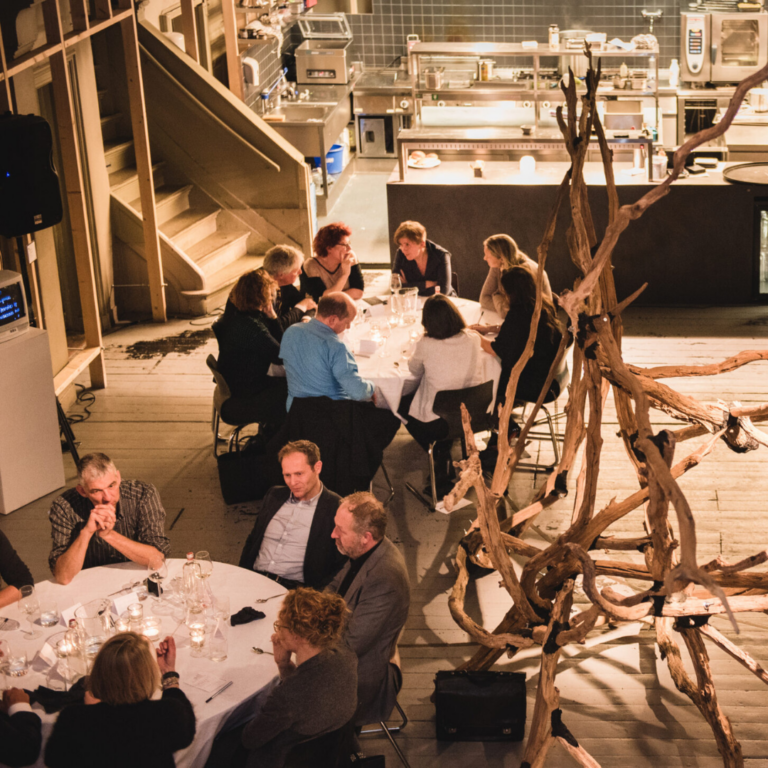
That is precisely what a curious encounter is. Not a meeting and not a workshop, but a carefully designed gathering in which your employees, stakeholders or target group conduct living inquiry into a complex challenge. In equality, drawing on differences in perspective — with head, heart and hands.
When is a curious encounter the right choice?
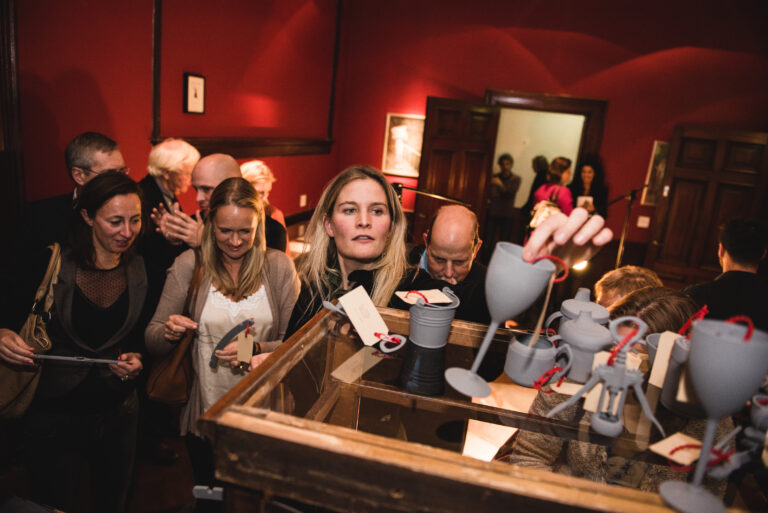
A curious encounter is an effective form of gathering for challenges that give rise to many different opinions. Consider a question such as: ‘When are we as an organisation sustainable enough?’ You can imagine that such a question yields different answers depending on who you ask. In the dynamics of an ordinary meeting, we often get stuck trying to convince each other of our own position. Or we let it go and the disagreement continues to work its way through the undercurrent. And so we rarely move beyond allowing our convictions to collide.
What these situations have in common is not a lack of plans or decisiveness, but a lack of deeper mutual understanding. That is precisely what a curious encounter is for.
Those different opinions say a great deal about the values of the people who hold them. Once we are able to meet one another beneath our convictions and opinions, something truly valuable begins to emerge.
What others say
What you can expect
Every curious encounter begins with a careful exploration of the central question. Together we determine who needs to be involved and which perspectives are needed to understand the challenge fully. Drawing on the proven Future Search model, we look together at which people – or representatives of the system – have a stake in the challenge. I design the structure and form of the gathering on a bespoke basis. Participants are introduced in advance to several principles of curious encountering, to create the space needed to move beyond old thinking, existing assumptions and limiting patterns.
During the encounter, we work with dialogue, reflection and targeted interventions that make assumptions visible and allow new insights to emerge. Sometimes that means listening to experiences that had previously gone unspoken, sometimes sharing concerns or expectations, and sometimes exploring tensions that had long been in the air but had never been examined in the light. The form always follows the question. Where meaningful, I work with artistic interventions and artists, for instance to make tangible what cannot yet be expressed in words.
As we go, greater clarity emerges about what the challenge truly asks for and which next step is fitting for those involved.
What it delivers
When people meet around a shared question, something changes in the way they look at the challenge and at one another. Participants learn to regard their own ‘truth’ or ‘opinion’ as a perspective, they gain an eye for the value of the other, and the willingness to take shared responsibility grows visibly.
Differences become a source of inquiry; so-called ‘truths’ are examined. The outcome is collective direction on the challenge and a stronger mutual connection between the people who were present.
Practical
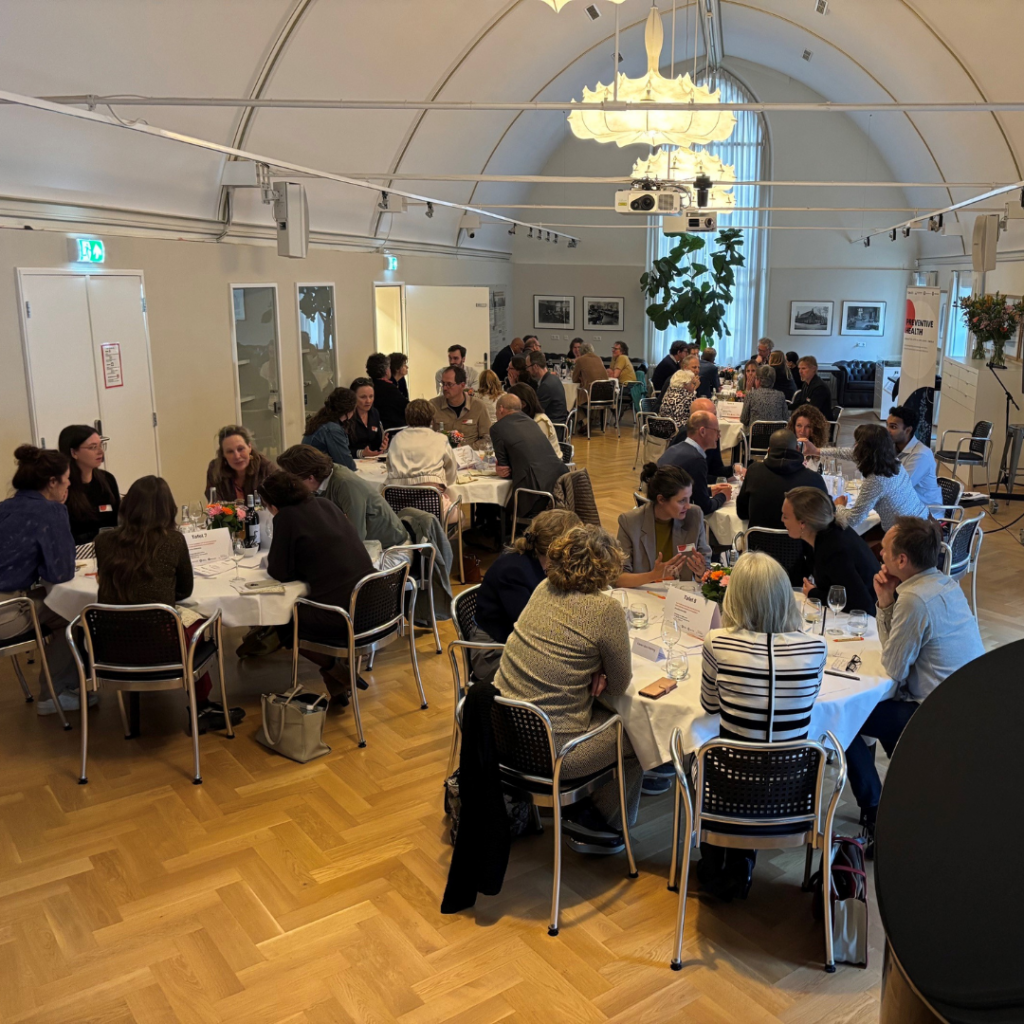
A curious encounter takes place over a half day or a full day, depending on the nature of the challenge and the number of people involved. Together we determine who needs to be present, which form is most fitting and what preparation is needed to allow the encounter to unfold with care. The gathering can take place within the organisation or at an external location, depending on what the challenge and the participants require.
Ready to organise a curious encounter?
When a challenge touches multiple people and it is important to find direction together, I would be glad to explore with you what is needed and which form of encounter might be most fitting.
About Suzanne
I am a cultural scientist, executive and guide for leaders and organisations working in complex circumstances. In my practice, I learned that movement rarely comes from giving more answers. It usually begins the moment someone dares to ask a different question and is willing to look with attention at what is truly at play.
Investigative living and leadership is my specialism. In a Curious Encounter, I invite people to look with curiosity at their own theme and practice — beyond quick judgements and fixed convictions. Not to tell them what to do, but to create space for their own wisdom and movement.